Best Buy · AI · Product Design · Cross-functional Leadership
The Future of Agentic Commerce
Leading the design of Best Buy’s first AI-native purchasing experience across OpenAI, Stripe, and Best Buy.
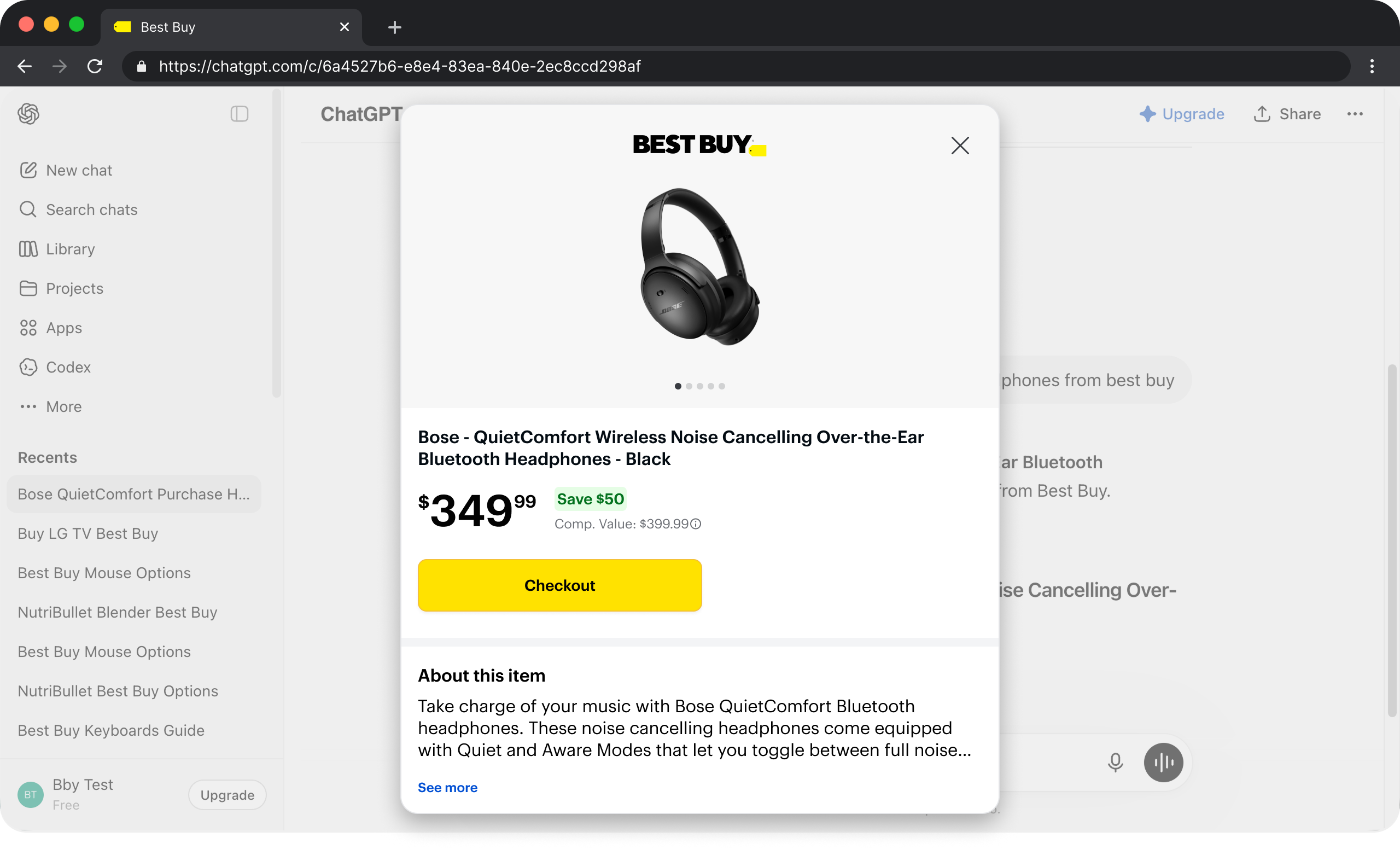
The customer opportunity
Reducing the friction between AI driven discovery and purchase
Traditional ecommerce asks customers to leave the conversation, navigate to a retailer, and begin the buying journey from scratch. Agentic Commerce shortens that path by allowing customers to purchase at the moment they’ve decided what they want.
Customers expect a seamless path from product discovery to purchase. However, transitioning from ChatGPT recommendations to Best Buy’s website creates a fragmented experience, forcing customers to restart their journey in a new environment and introducing friction at a critical decision point.
The business opportunity
Meeting customers in new discovery environments
AI is changing where and how customers begin their shopping journeys. As product discovery moves beyond traditional retail channels, Best Buy has an opportunity to extend its commerce capabilities into new customer touchpoints.
As the Experience Designer representing Best Buy, I was responsible for defining the end-to-end purchasing experience within ChatGPT in the form of an MCP application. Working closely with product managers, engineers, Stripe, and OpenAI, I helped establish the interaction patterns, product scope, and UX strategy for a platform with few existing conventions and shared ownership across multiple organizations.
Shared ownership
Designing across organizational boundaries
Although customers experience a single purchase flow, ownership shifts across three independent platforms.
The strategy
Defining MVP scope & design direction
One of the earliest decisions was whether to recreate Best Buy’s full shopping experience or focus on the moment of purchase. To reduce complexity and validate the core concept, the MVP prioritized a streamlined checkout flow over a comprehensive shopping experience.
Full shopping experience
Instant checkout
Reintroduces browsing and comparison the conversation has usually already done.
Matches why the customer is here: a specific product they have already chosen.
More surface area, more to build, and more that can go wrong before launch.
A focused scope with a clear, shippable boundary.
A longer path to a live experience.
The fastest path to launch and start learning.
Ship instant checkout: the most direct route from a chosen product to a placed order, and a clean foundation to grow from.
Scoping for instant checkout
The team then worked through a series of scoping sessions to translate the vision into a defined MVP, identifying which capabilities were essential for launch and which would be deferred to future iterations.
Guest checkout only
No account required to buy. Baymard attributes 19% of checkout abandonment to forced account creation, so guest checkout removes a known drag on conversion.
One product per order
A single product, in single or multiple quantities.
Ship to home
With a choice of shipping speeds, including paid expedited options.
Estimates after address
Delivery timing and shipping options appear once the customer enters an address and we can make them accurate.
Three decisions that gave it shape
With the MVP defined, the remaining work centered on resolving a handful of foundational design questions. These decisions established the interaction model for the experience and influenced how customers would move from product discovery to purchase within ChatGPT.
Decision 01 · Implementing feedback
Should users see a product details page before checkout?
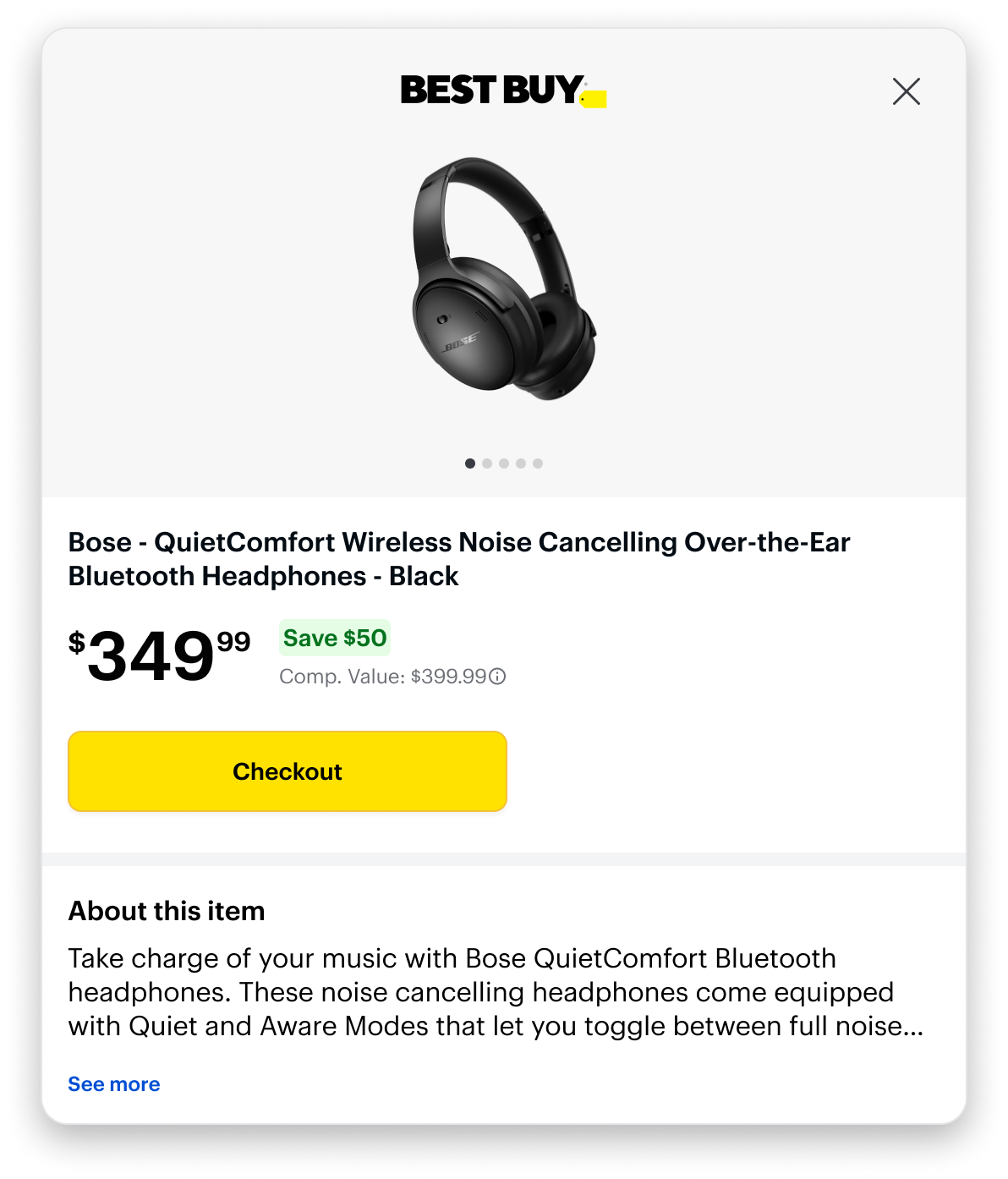
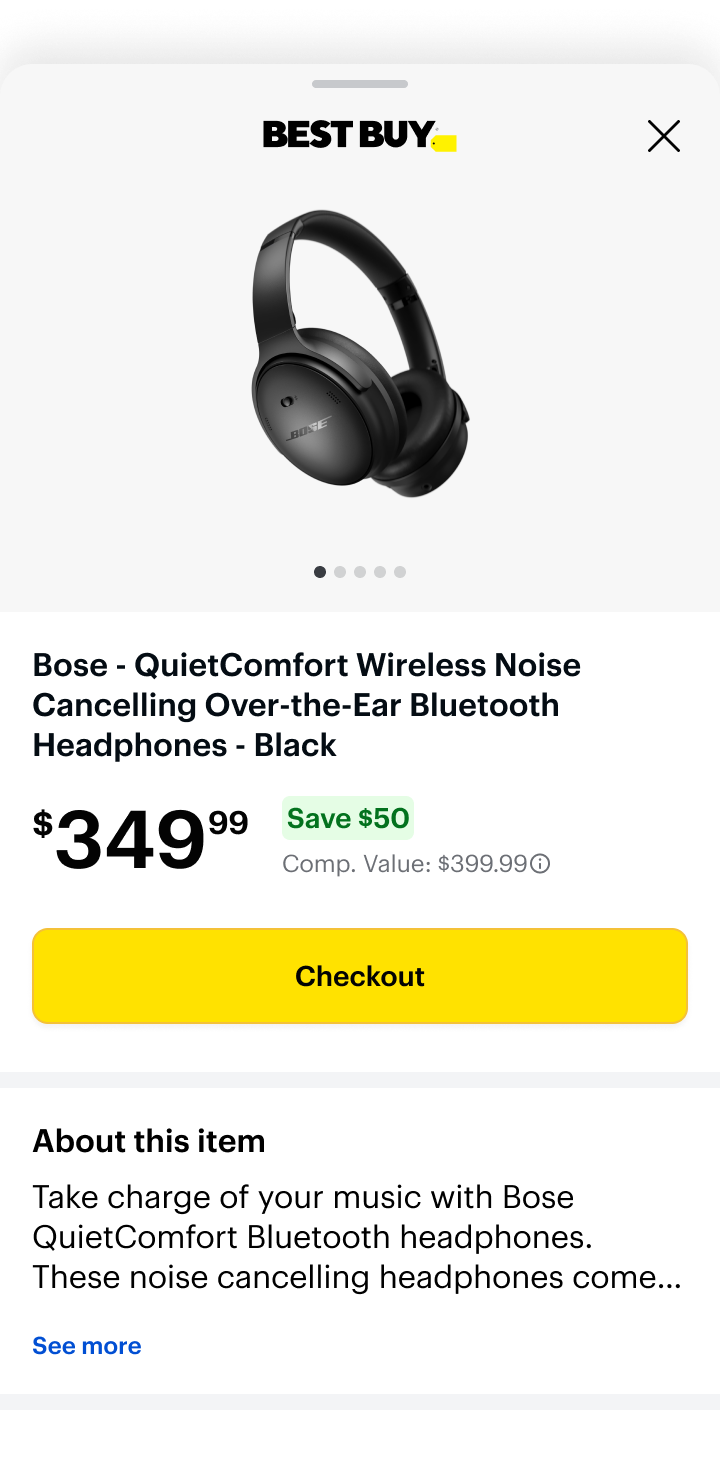
The initial flow moved customers straight into checkout. OpenAI’s reviewers challenged that flow. ChatGPT provides recommendations, but not the depth of information found on a retailer’s product page. Customers still need confidence before making a purchase.
“ChatGPT can’t guarantee the price or details it shows match what’s on Best Buy’s own experience. Customers need a place to verify before they check out.”— OpenAI review feedback
I designed a lightweight Product Detail Page that gave customers the information needed to confidently purchase a product without recreating Best Buy’s entire browsing experience.
Decision 02 · Horizontal journey
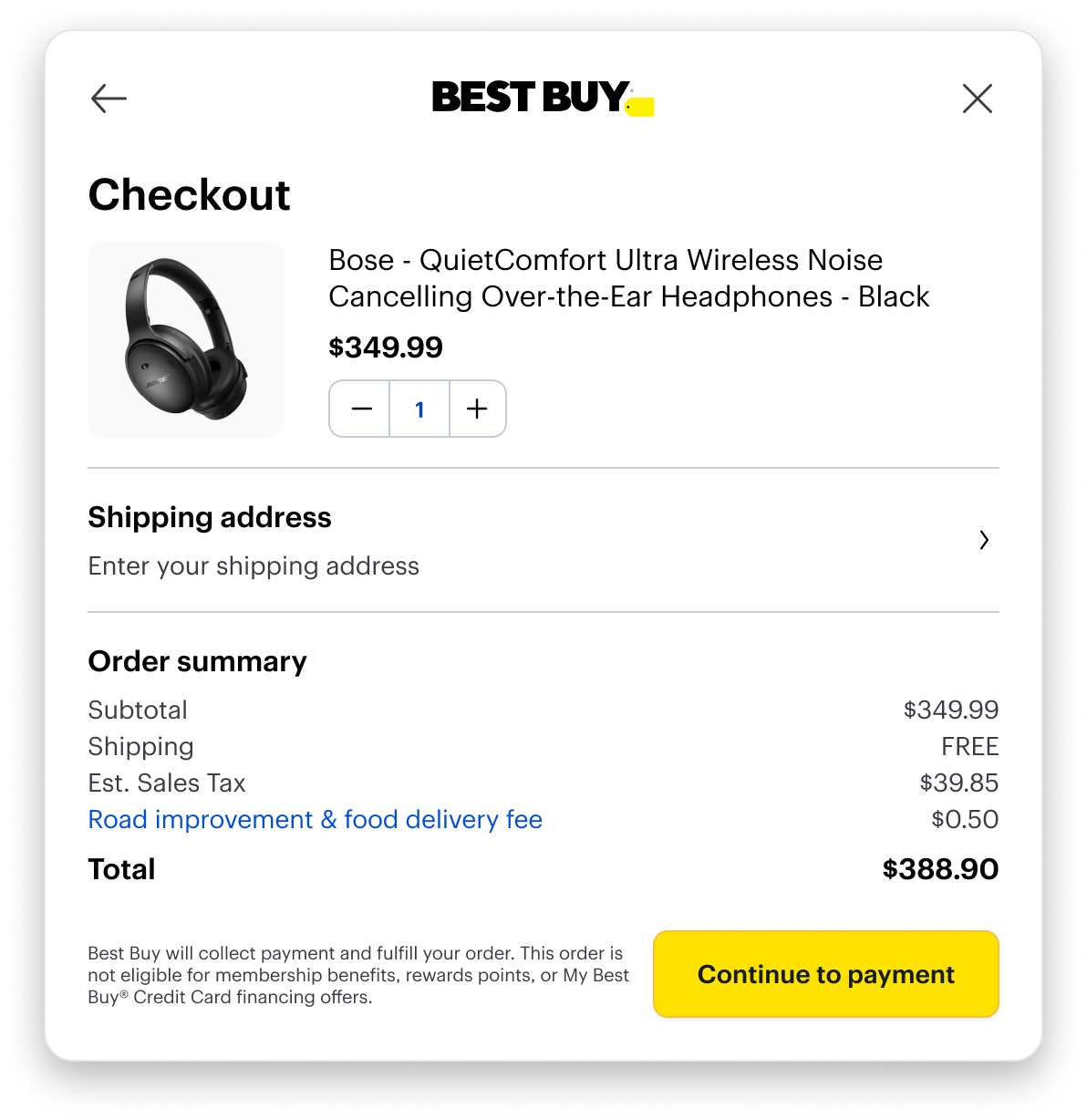
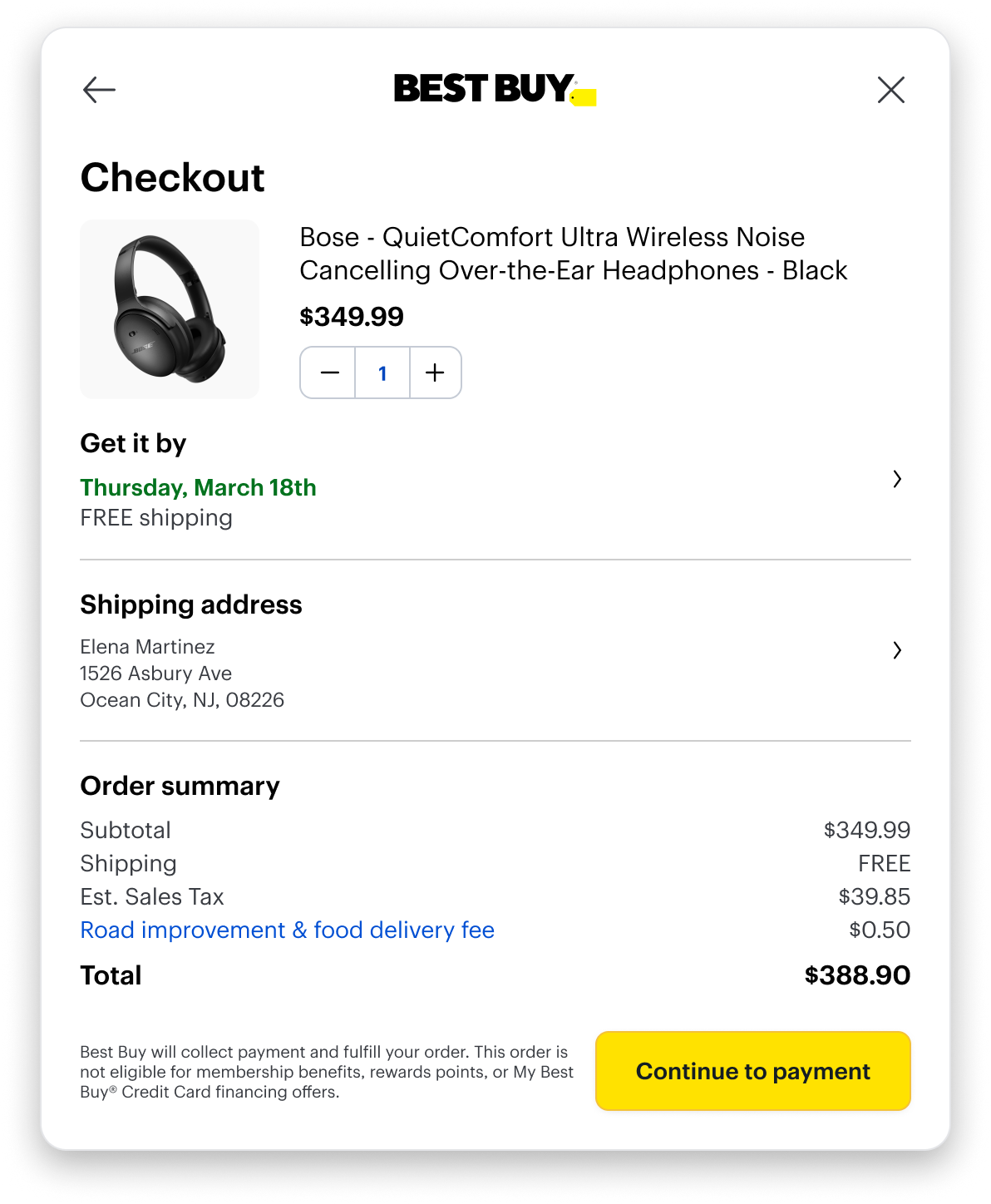
Delivery estimates only when they are accurate
Delivery cost and timing are among the strongest drivers of checkout abandonment. Baymard ranks high extra costs first at 39% and slow delivery close behind at 21%, so customers expect this information early.
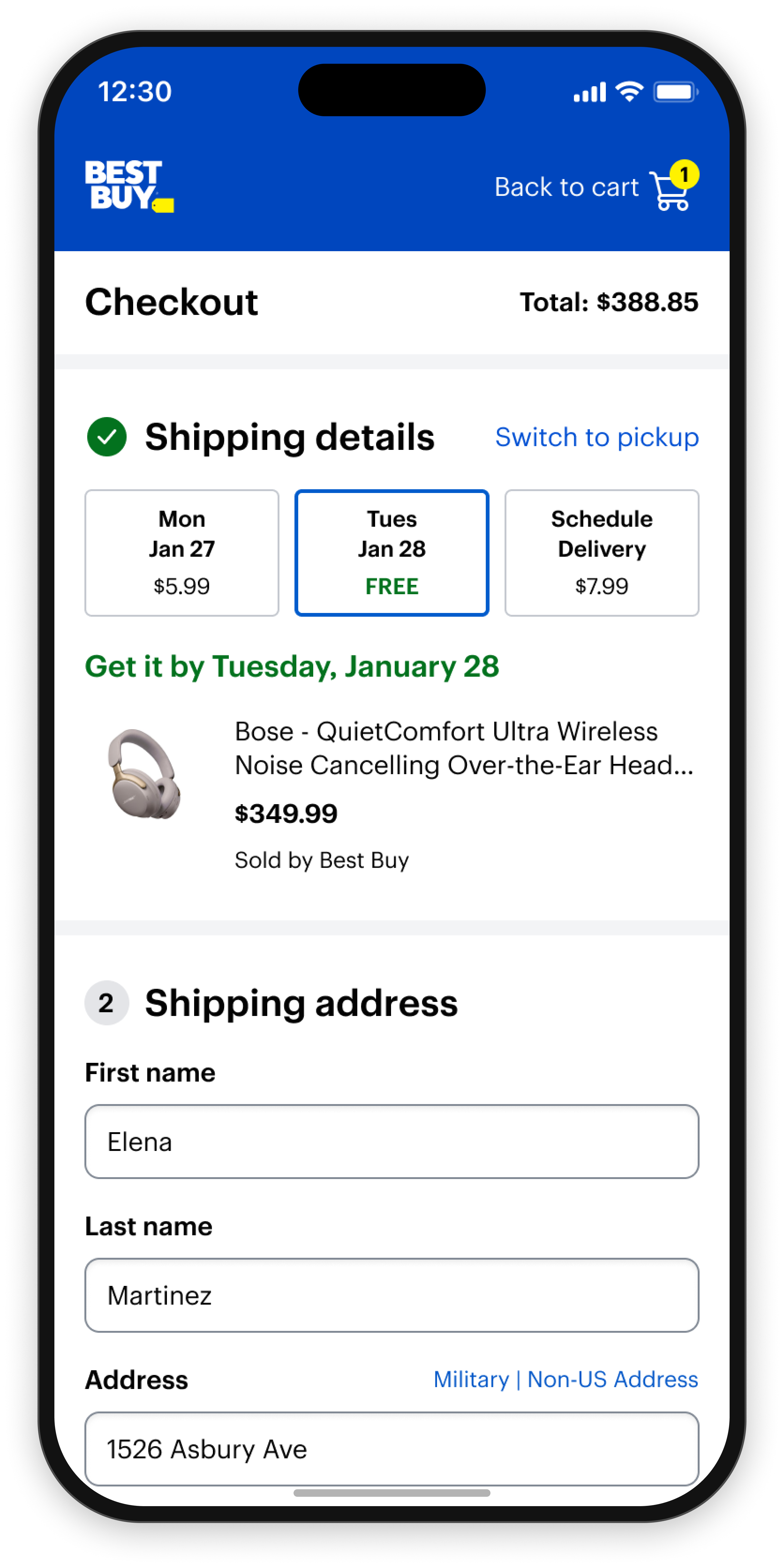
Without a reliable way to determine customer location, any delivery estimate shown before checkout would have been speculative. I designed the experience to surface delivery timing only after the shipping address was entered, ensuring every estimate reflected real availability.
Ask ChatGPT for location
Relied on information that OpenAI couldn’t reliably provide.
Assume a default ZIP
Introduced inaccurate delivery expectations.
Chosen approach
Display delivery timing only after a shipping address is entered, ensuring every estimate is accurate.
Decision 03 · Responsive design
The right container for MVP
OpenAI’s platform supported two ways to render the experience on desktop: within a modal alongside the conversation or as a full-page takeover. Each option shaped how customers transitioned from conversation to purchase.
While a full-page experience offered greater flexibility for future shopping capabilities, it introduced unnecessary complexity for an MVP centered on completing a single purchase. I designed the experience within OpenAI’s modal container, keeping the purchase closely connected to the conversation while leaving room to scale into a full-page experience as the product evolved.
Full-page experience
Modal container
Pulls customers away from the conversation
Keeps purchasing connected to the conversation
Better suited for a complete storefront
Optimized for a focused purchase flow
Supports broader commerce capabilities
Can evolve into a full-page experience later
Ship the modal, and design it to move to a full-page layout once a broader experience justifies the room.
Partnering through build and validation
Because this experience introduced a new commerce model across three organizations, successful delivery required close collaboration beyond the traditional product team. I partnered directly with Stripe and OpenAI throughout implementation to validate assumptions, uncover edge cases, and refine the experience as the technical foundation evolved.
I ran it as a live loop. We worked through design reviews and moved quickly over Slack on the smaller calls. Once Stripe had a test build running on a ChatGPT account, I went through it in context, found where it drifted from the Best Buy system, and gave specific direction on what to change and how.
The final experience
A single purchase that moves across three companies without requiring the customer to think about the handoffs between them.
Bringing this experience to life required designing not only the interface, but also how commerce should behave inside a conversational environment.
Because this was one of the first implementations of its kind, many interaction patterns were still being defined. I partnered closely with Stripe and OpenAI throughout development, using a dedicated ChatGPT test account to validate real purchase flows and identify gaps between the intended experience and the platform behavior.
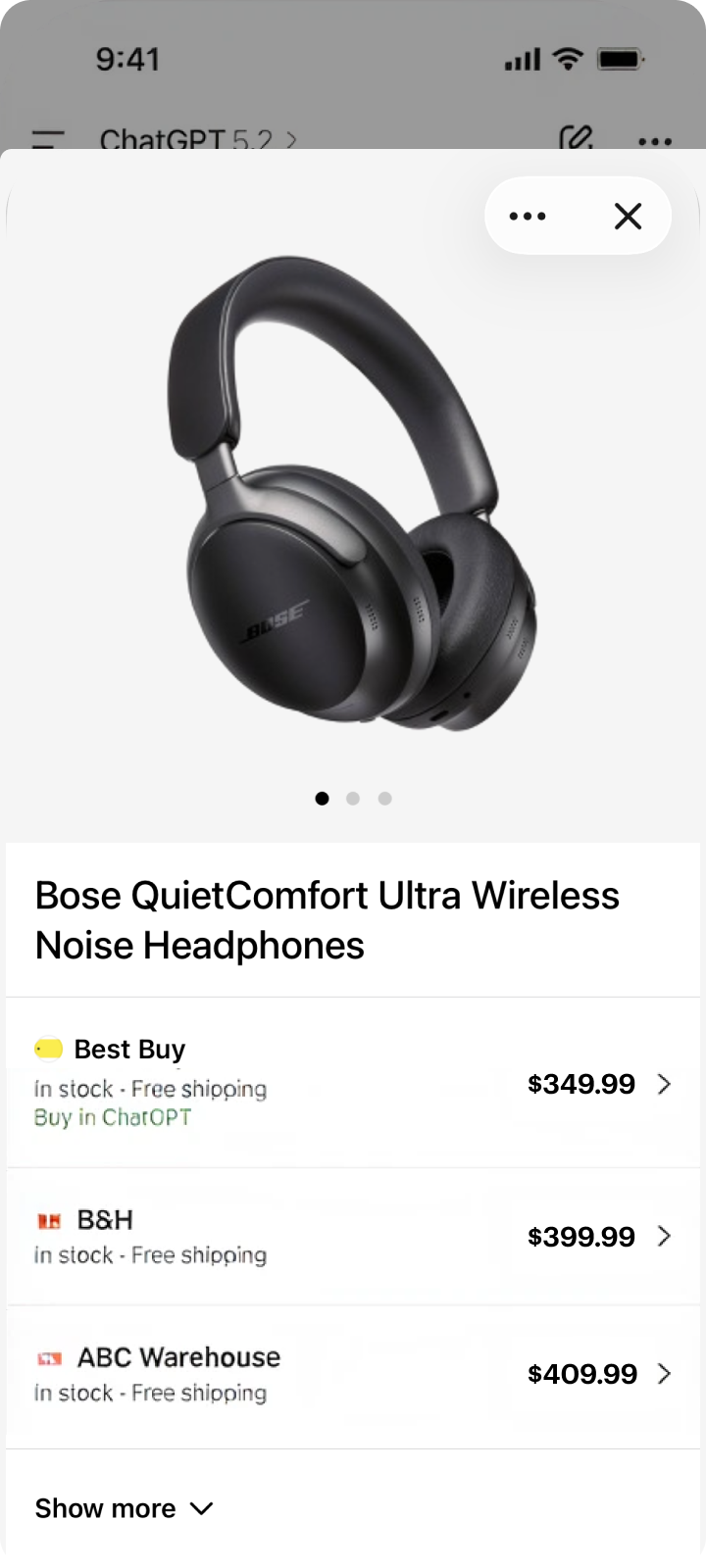
Buying options · OpenAI
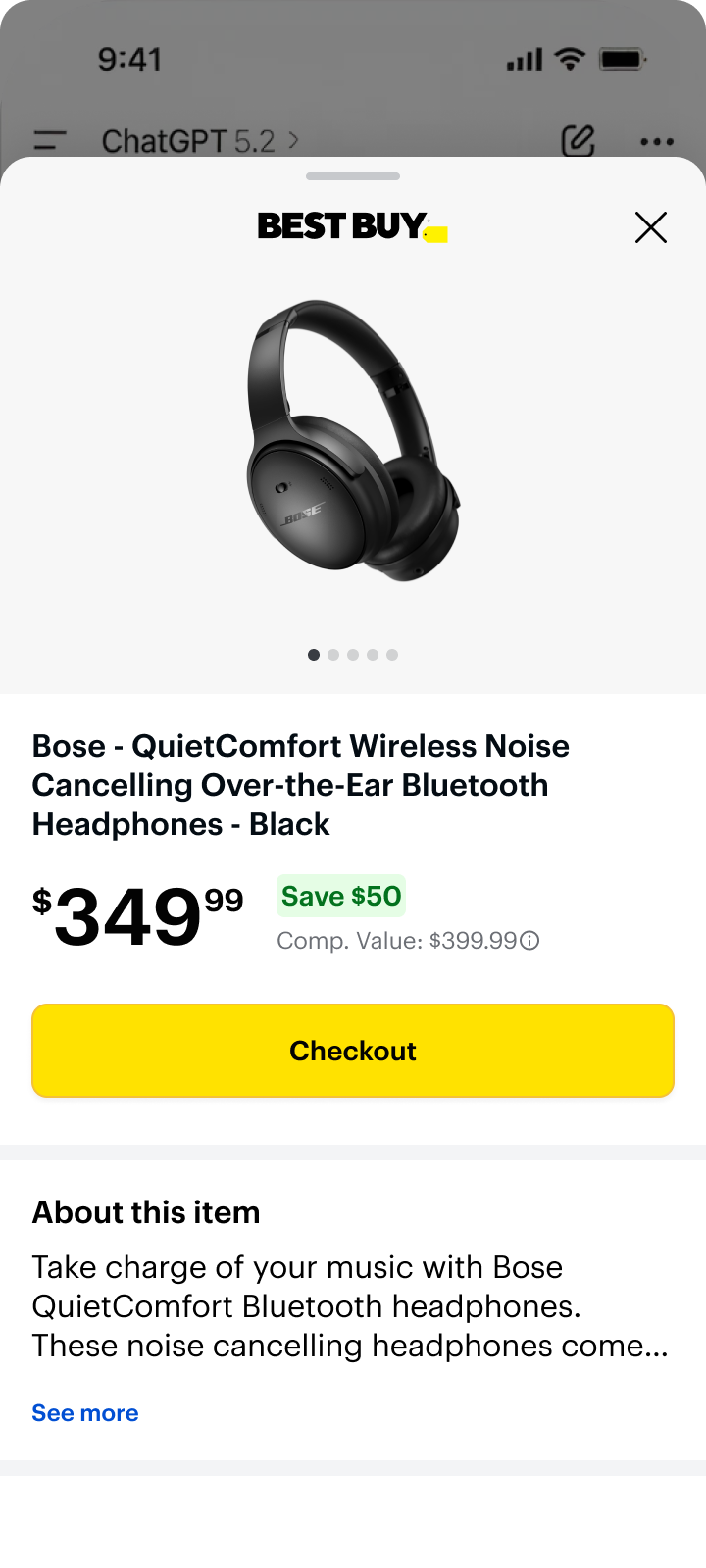
Product detail · Best Buy
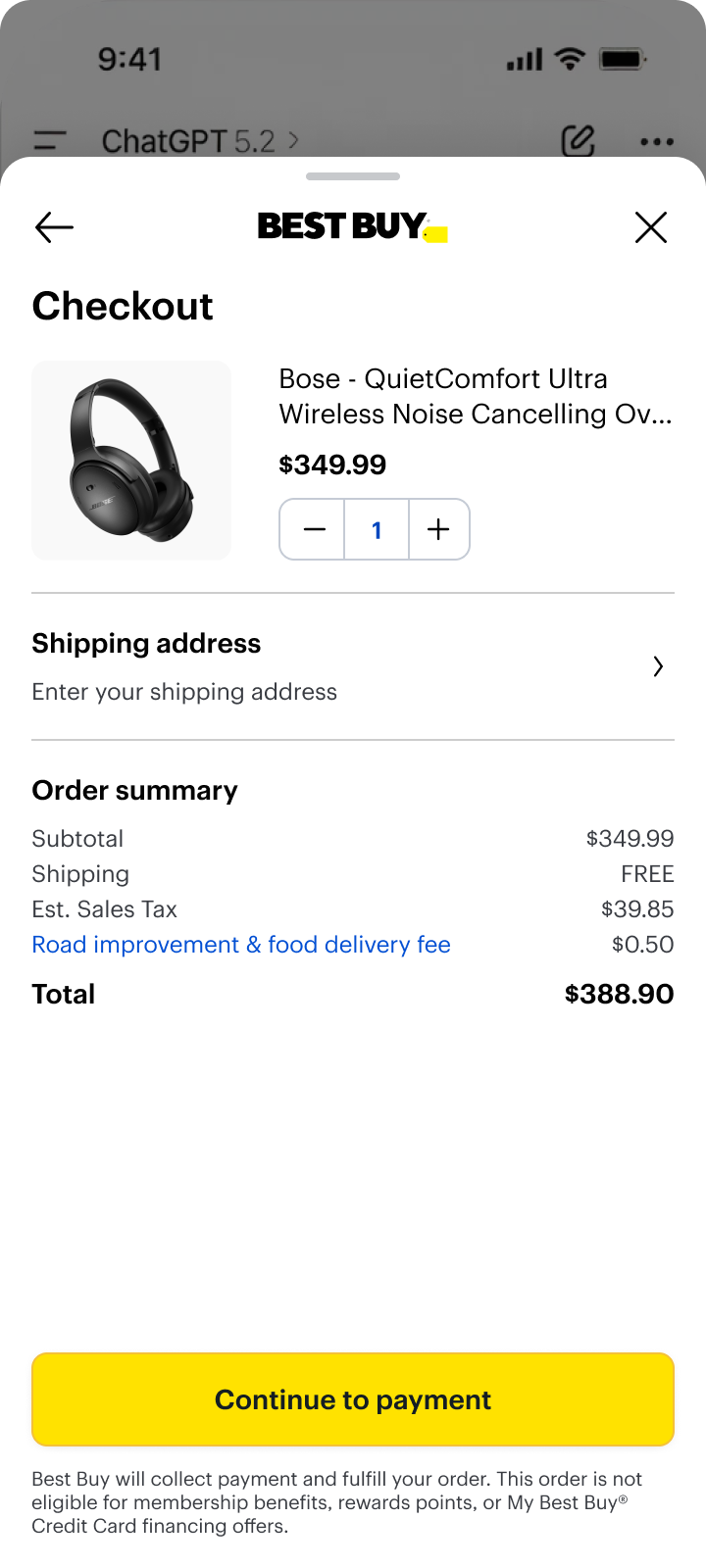
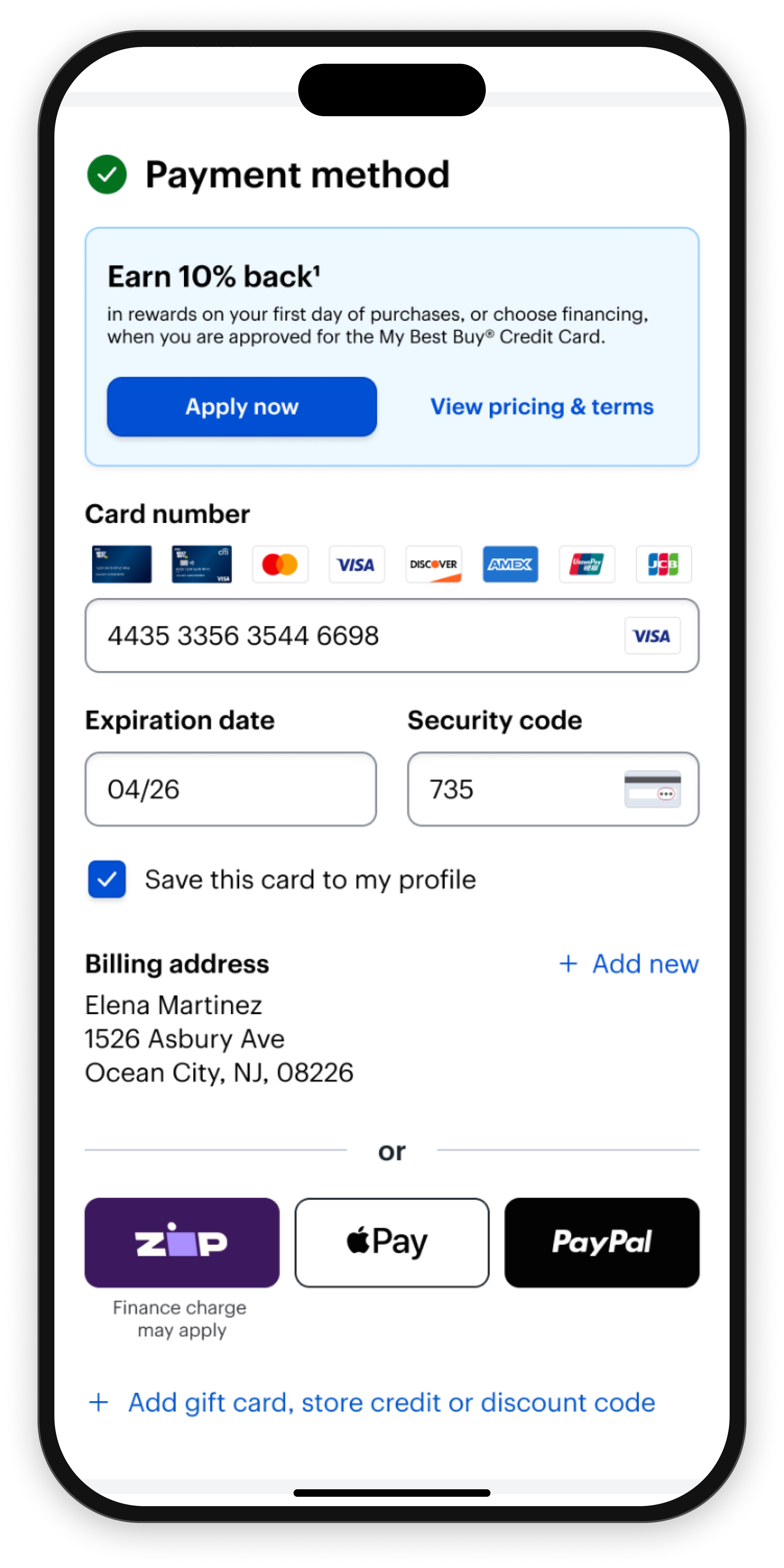
Checkout · Best Buy
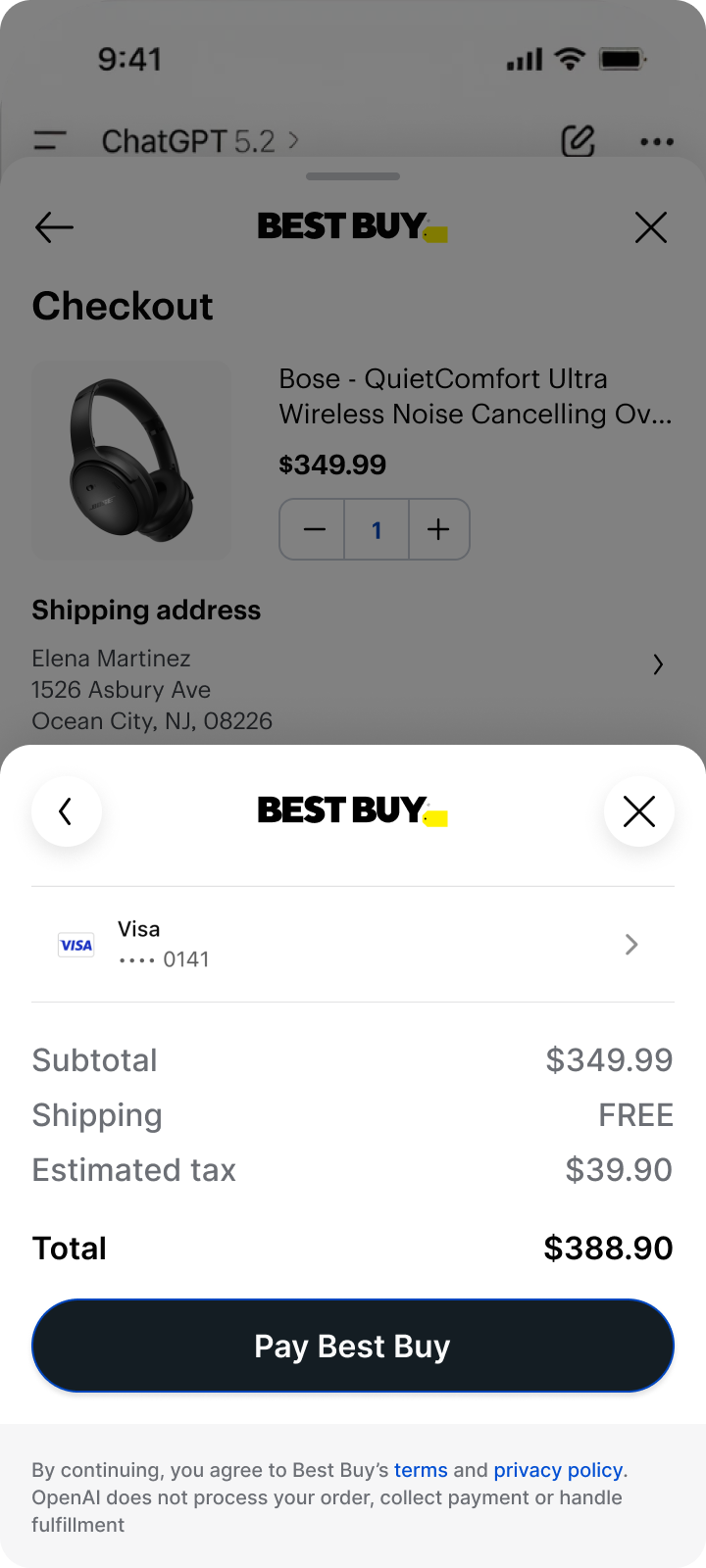
Payment · OpenAI
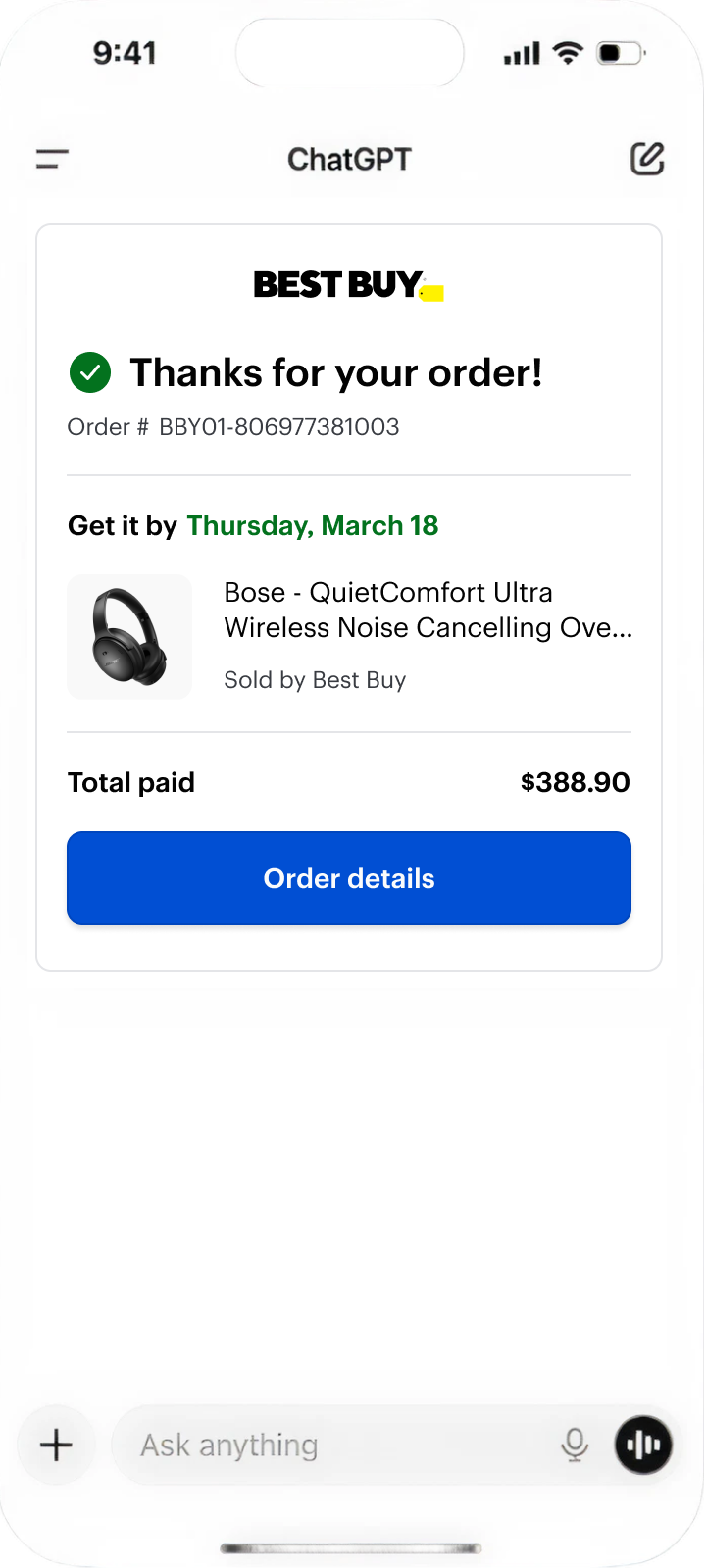
Confirmation · Best Buy
What I learned
This project reshaped how I approach design, largely because I did not own the full system and could not design as if I did.
Designing commerce inside ChatGPT challenged traditional e-commerce patterns and required the team to rethink how customers discover, evaluate, and complete purchases in a conversational environment.
The biggest lesson was learning how to design responsibly within emerging technology. By partnering with Stripe and OpenAI, I learned the importance of understanding constraints early, making thoughtful tradeoffs, and protecting customer trust when the ideal experience is not always technically possible.
This project reinforced that great experiences are created through partnership, bringing together customer needs, business goals, and technical realities to create something intuitive and reliable.
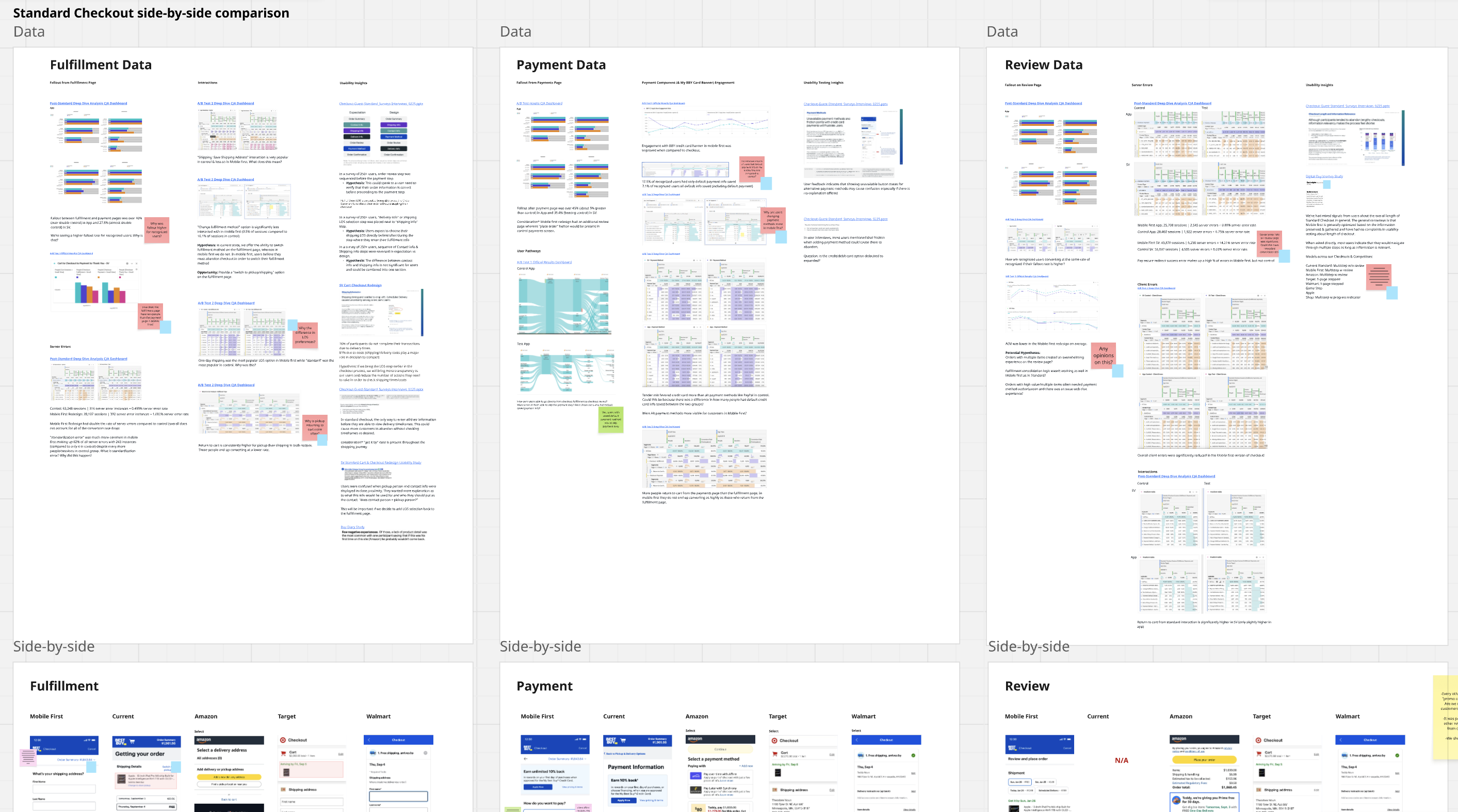
Defining the future of checkout
After a redesign failed its A/B test, I led the discovery that uncovered why and aligned three teams on a new data-backed direction.
View case study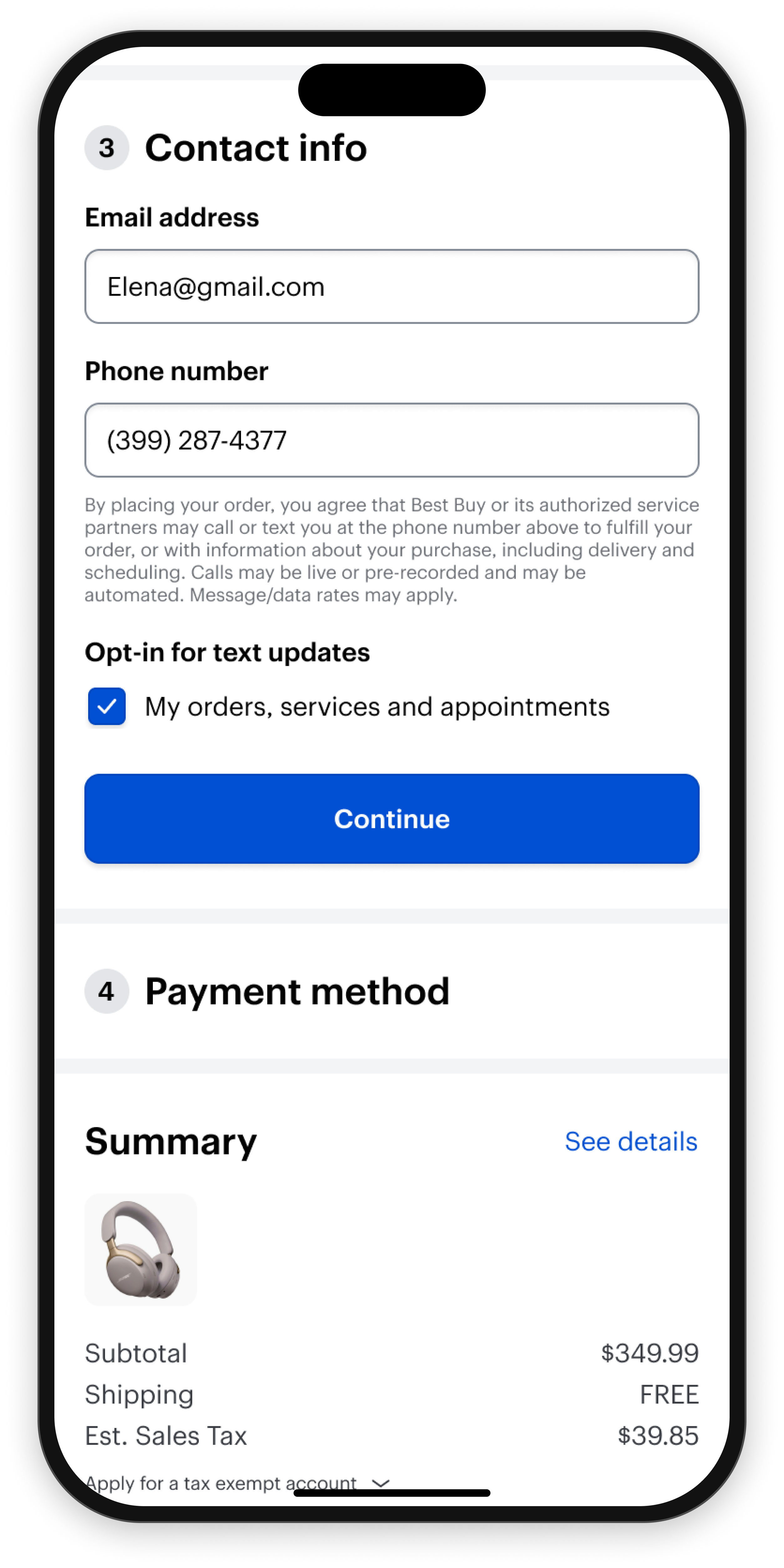
Building the future of checkout
Designing the one-page checkout end to end, and protecting the direction through complexity, constraints, and experimentation.
View case study